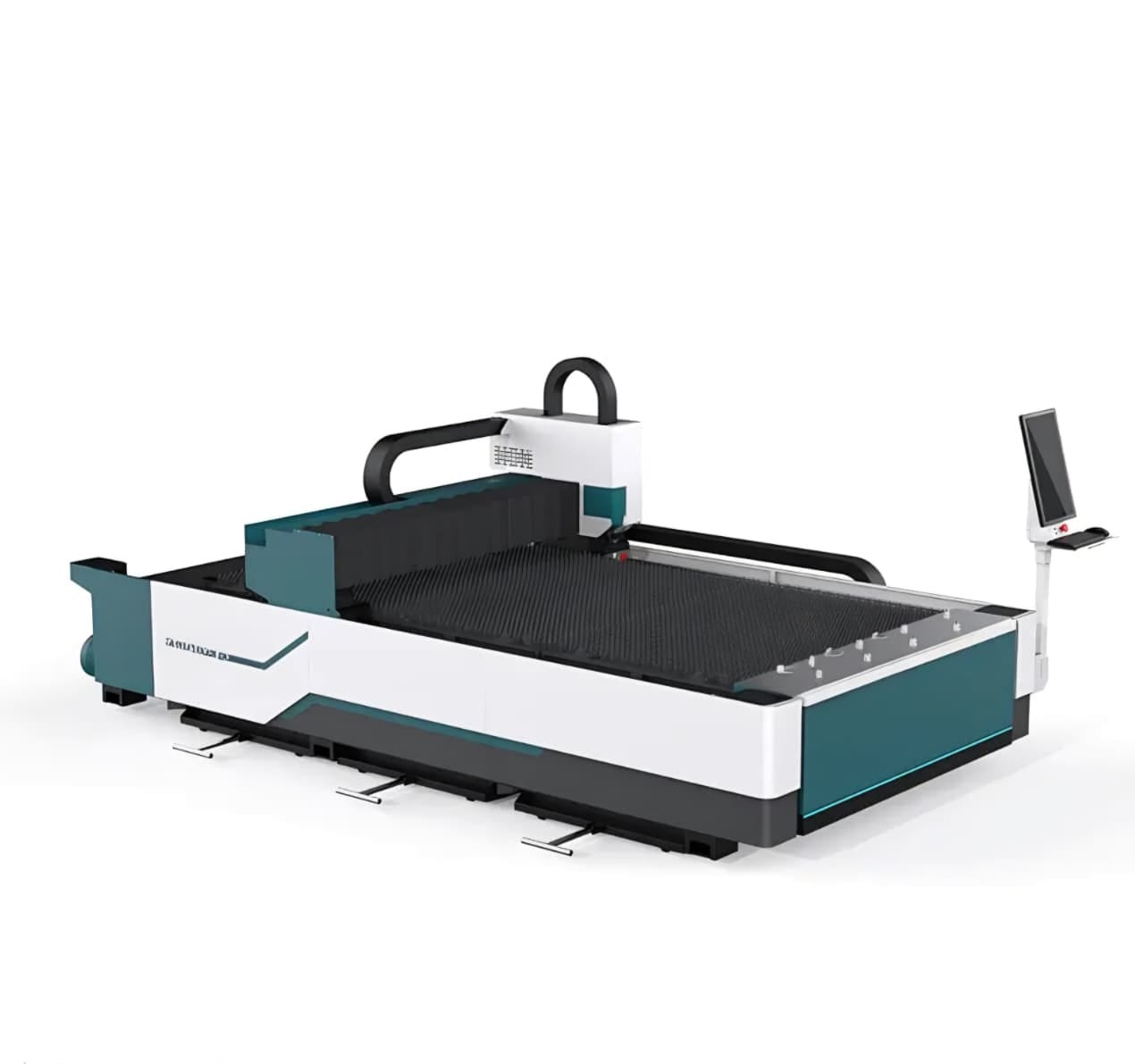
Choosing a laser cutting machine is less about finding “the best machine” and more about matching four variables to your actual order book: laser power, working format, source brand, and level of automation.
Start with the thickest material you cut weekly — not the thickest you have ever cut. A 6 kW source handles 20 mm carbon steel and 12 mm stainless comfortably; buying 12 kW “just in case” ties up capital that automation would repay faster.
Format follows nesting efficiency. If 80% of your work fits a 3000 × 1500 mm sheet, the LF3015 platform is the right economic answer. High-mix job shops running plate should look at exchange-table machines like the LF8025P, where a 15-second pallet swap effectively adds a shift of capacity per week.
On sources: Raycus, MAX and JPT have closed most of the gap with IPG for CW cutting below 12 kW, at a materially lower price. Above 20 kW, discuss duty cycle with our engineers — assist-gas cost becomes the dominant operating expense, not electricity.
Finally, price the whole system: chiller, extraction, nesting software, training and freight. LaserForge quotes are always all-inclusive, which is why our customers can calculate payback before the machine ships.