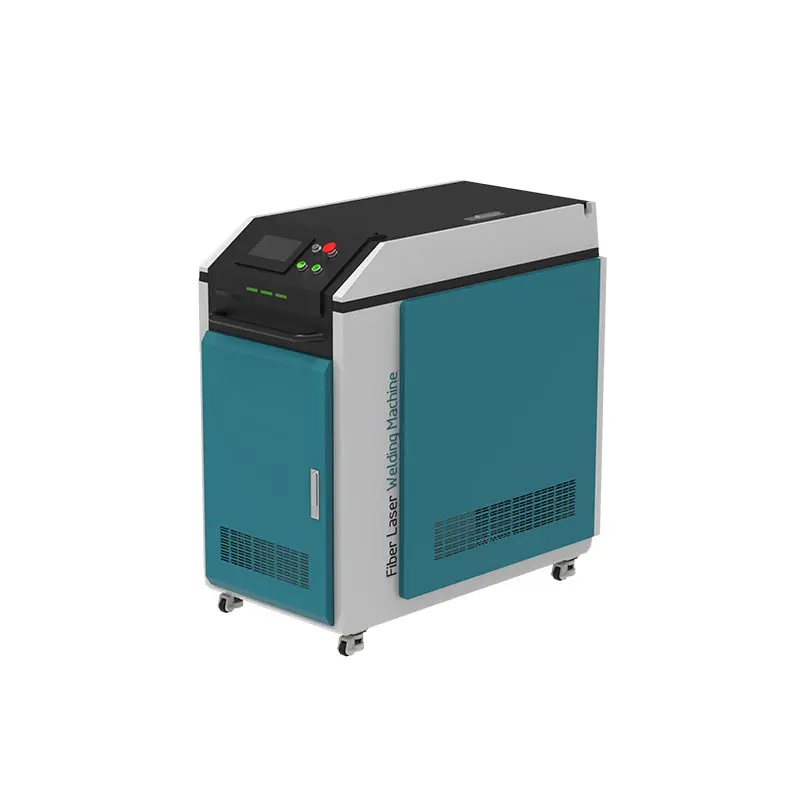
The most common reaction from a first-time laser welding operator is disbelief: a clean stainless seam, no discoloration, no post-grind, on the first afternoon of training.
The speed claims are real. On 1–3 mm stainless, a 1500 W handheld welder runs 2–4× faster than TIG with less heat input, which means less distortion on thin panels, boxes and enclosures. The wobble head bridges small gaps that would stall a TIG torch.
The honest limitations: laser welding rewards fit-up. Gaps above ~0.5 mm need the wire feeder; above ~1.5 mm they need better fixturing. And safety discipline matters — our guns carry 10 interlocks, and we ship laser-safety eyewear and signage with every unit, but the shop still has to enforce a controlled welding area.
Power selection is simpler than for cutting: 1500 W covers most job-shop stainless and mild steel to ~4 mm penetration; 2000–3000 W earns its cost on aluminum and thicker sections.
After 30 days, the pattern we see is consistent: the laser welder becomes the default for stainless and thin work, TIG stays for exotic alloys and open-root pipe, and MIG keeps the heavy structural jobs.